


In ODD is More Than Questionnaires, we set out three signals that a questionnaire- led process will reliably miss: financial stress, cyber exposure, and reputational risk. We’ve gone deeper on the first two and covered Financial Statement Red Flags and Why Cyber Risk belongs in Operational Due Diligence. This article completes the set.
Reputational and personnel risk behaves differently to the other two. Financial deterioration shows up in the numbers eventually. Cyber exposure can be measured from the outside, whether a manager discloses it or not. Reputational risk is different; it often exists first as a story. A departure, dispute, regulatory enquiry, or piece of adverse coverage in the trade press. By the time any of that reaches a formal disclosure or a questionnaire response, it may already be old news to everyone except the allocator relying on an annual cycle to find out.
As we put it previously: media surveillance asks what the world is saying about a firm that it hasn’t yet said to you. This piece looks at what that means in practice, what a real-time media monitoring capability should be watching for, and where it fits alongside the financial and cyber signals that we’ve already covered.
Why this signal is time-sensitive in a way the others are not
A questionnaire cycle assumes the manager as the primary source of information about themselves. For governance structures and control frameworks, that’s a reasonable starting assumption, imperfect, but reasonable. For reputational risk, it breaks down faster, because a manager has limited incentive to proactively flag an unfolding personnel dispute, a regulatory enquiry that hasn’t yet resulted in a finding, or litigation they consider immaterial to the fund’s operations.
None of that is necessarily concealment. Much of it falls into genuine grey areas. Matters that are ongoing, unresolved, or that a manager reasonably judges to be outside the scope of a questionnaire drafted eighteen months ago. But grey areas are exactly where allocators need visibility, and exactly where a periodic review process is structurally weakest. A story can break, develop, and move from a single trade publication into mainstream coverage well within the gap between two scheduled reviews.
This is also a signal where speed compounds. A leadership departure covered once, in isolation, may mean very little. The same departure, followed within weeks by a second senior exit and a regulatory enquiry reported by a specialist outlet, is a materially different picture, and one that is only visible if someone is watching continuously rather than reviewing periodically.
What real-time media monitoring should be watching for
Treated properly, this isn’t a Google alert on a firm’s name. It is a structured signal with specific categories worth tracking, including:
Leadership and key-person changes
Unplanned departures, board or ownership changes, and any coverage of principal’s conduct or affiliations outside the fund itself, particularly where that individual holds concentrated authority within the firm, the kind of concentration we flagged as a standalone red flag.
Regulatory and enforcement activity
Enquiries, sanctions, and enforcement actions reported before, or instead of, formal disclosure, including actions against affiliated entities or individuals in other jurisdictions.
Litigation and disputes.
Civil claims, employment disputes, and disputes with counterparties or former staff, especially where allegations involve trade secrets, client solicitation, or the integrity of investment processes.
Operational incidents surfacing externally
Cyber breaches, administrator or auditor issues, and service disruptions that reach the press before, or instead of, a manager’s own notification. This is one of the clearest overlaps with the cyber signal we’ve written about separately: a breach is sometimes reported by journalists before it’s reported by the manager.
Ownership and structural change
M&A activity, changes in control, and the entry or exit of significant investors, which can shift a fund's incentive structure in ways a questionnaire response won't capture until the next cycle.
Sentiment and coverage velocity
A single adverse story is a data point. A sudden increase in the volume or negativity of coverage, particularly across multiple independent outlets, is a pattern worth escalating on its own.
Coverage type matters as much as coverage content. Trade and specialist press often carry material signal well before it reaches mainstream outlets, and smaller or less widely covered managers may only ever appear in the former. A monitoring approach calibrated to mainstream news alone will systematically under-cover exactly the managers where independent verification matters most.
From Noise to Signal
The practical challenge with media monitoring isn't finding coverage, it's filtering it. A named entity search against a large manager returns a great deal of irrelevant content: press releases, listicles, unrelated individuals who share a name. Done well, this signal needs to do more than surface volume.
Entity resolution that reliably distinguishes the fund and its people from unrelated results. Source weighting that reflects the credibility and specificity of different outlets, a specialist regulatory publication and an unmoderated forum post are not equivalent signals. Corroboration logic that treats a single unverified mention differently to the same claim appearing across independent sources. And alerting calibrated to materiality, so ODD teams are notified of developments that warrant attention, not copied on every mention of a manager's name.
This is also where the case for a multi-signal model holds up under scrutiny. A media signal in isolation can be ambiguous: is this coverage material, or noise? Read alongside financial trend data and cyber posture, the picture sharpens. A leadership departure that coincides with a widening expense ratio and no change in cyber posture reads differently to the same departure alongside a deteriorating financial trend. None of these signals is decisive on its own. Together, viewed continuously rather than at a point in time, they're considerably more informative than any one of them reviewed in isolation.
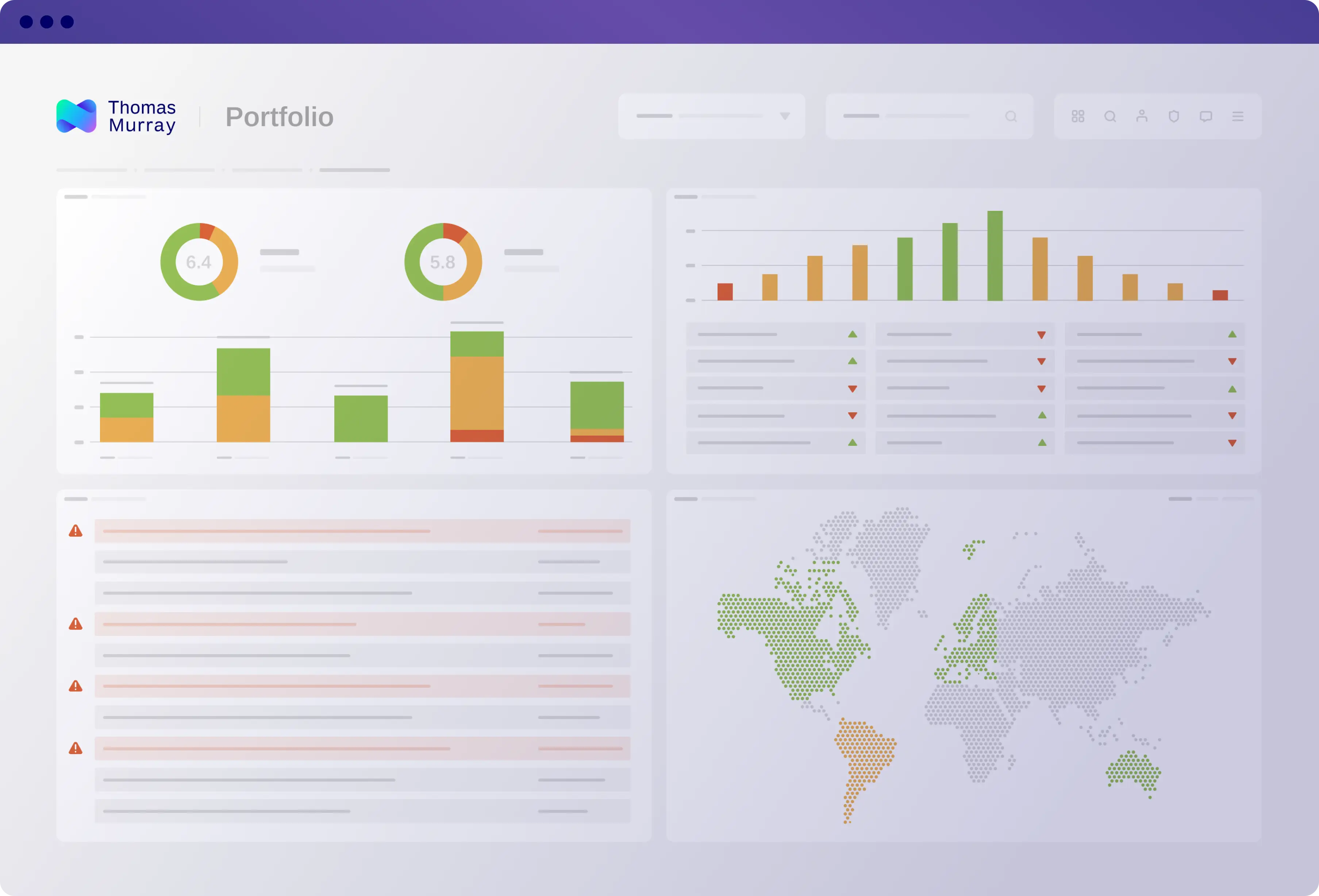
Curated news monitoring and alerting for in-scope entities already sits inside Thomas Murray's Orbit Risk platform, alongside the financial statement analysis and cyber risk evaluation covered in our previous two articles. For allocators who are further along in building out a broader monitoring programme, that's usually where it delivers the most value: one more continuously updating signal, aggregated into the same entity-level view as the rest of the ODD record, rather than a separate feed an analyst has to check independently.
Where This Leaves the Questionnaire
As with financial and cyber signals, none of this argues for retiring the questionnaire. It argues against treating it as sufficient for a category of risk that, by its nature, tends to become public before it becomes disclosed. Reputational and personnel risk moves at the pace of a news cycle, not an annual review calendar, and an ODD process should be built to notice the difference.
For a fuller view of how media and reputational monitoring sits alongside financial and cyber signals in a modern ODD framework, Thomas Murray's Operational Due Diligence: A Playbook for Asset Owners and Allocators covers the fundamentals in full.
As with financial and cyber signals, none of this argues for retiring the questionnaire. It argues against treating it as sufficient for a category of risk that, by its nature, tends to become public before it becomes disclosed. Reputational and personnel risk moves at the pace of a news cycle, not an annual review calendar, and an ODD process should be built to notice the difference.
Ready to see how continuous media monitoring fits into your ODD programme? Speak to our team about adding real-time reputational monitoring, standalone or as part of Orbit Risk, or explore Orbit Risk to see it alongside financial and cyber signals in a single view.
Operational Due Diligence
Automate your operational due diligence with Orbit Risk technology.
Get ongoing monitoring of your investment managers, track adverse media, and receive cyber risk alerts as they happen.
Insights

How Often Should ODD Be Refreshed? A Practical Framework
Most allocators do a full ODD review every 12 to 36 months, but the right cadence depends on risk. Here's a practical five-step framework for deciding how often to review each manager.

What AI Actually Changes About the DDQ (and What It Doesn't)
AI is transforming DDQ workflows, but it doesn't change what a questionnaire actually is: self-reported data. Here's where the line falls, and what to ask before adopting an AI-assisted tool.

From RFP to Ongoing ODD: Closing the Monitoring Gap
RFP rigour rarely survives past manager selection. What a robust RFP process looks like, and how to close the monitoring gap that opens once it's over.

Media Monitoring as an ODD Signal: What to Watch For
Reputational signals move faster than annual reviews. Here's what real-time media monitoring should catch in operational due diligence, and why.